Know Your Watershed: Stormwater
As part of our 2026 program theme, “Ecologies of Water,” WLC is proud to present “Know Your Watershed,” a monthly series that explores the parts of our local water system and how to care for them. Our focus this month is “stormwater and impervious surfaces.”
While we’ve talked about various local water features from flowing waters like rivers to temporary wetlands, we’re now naming areas of concern in our beloved Sawkill watershed.
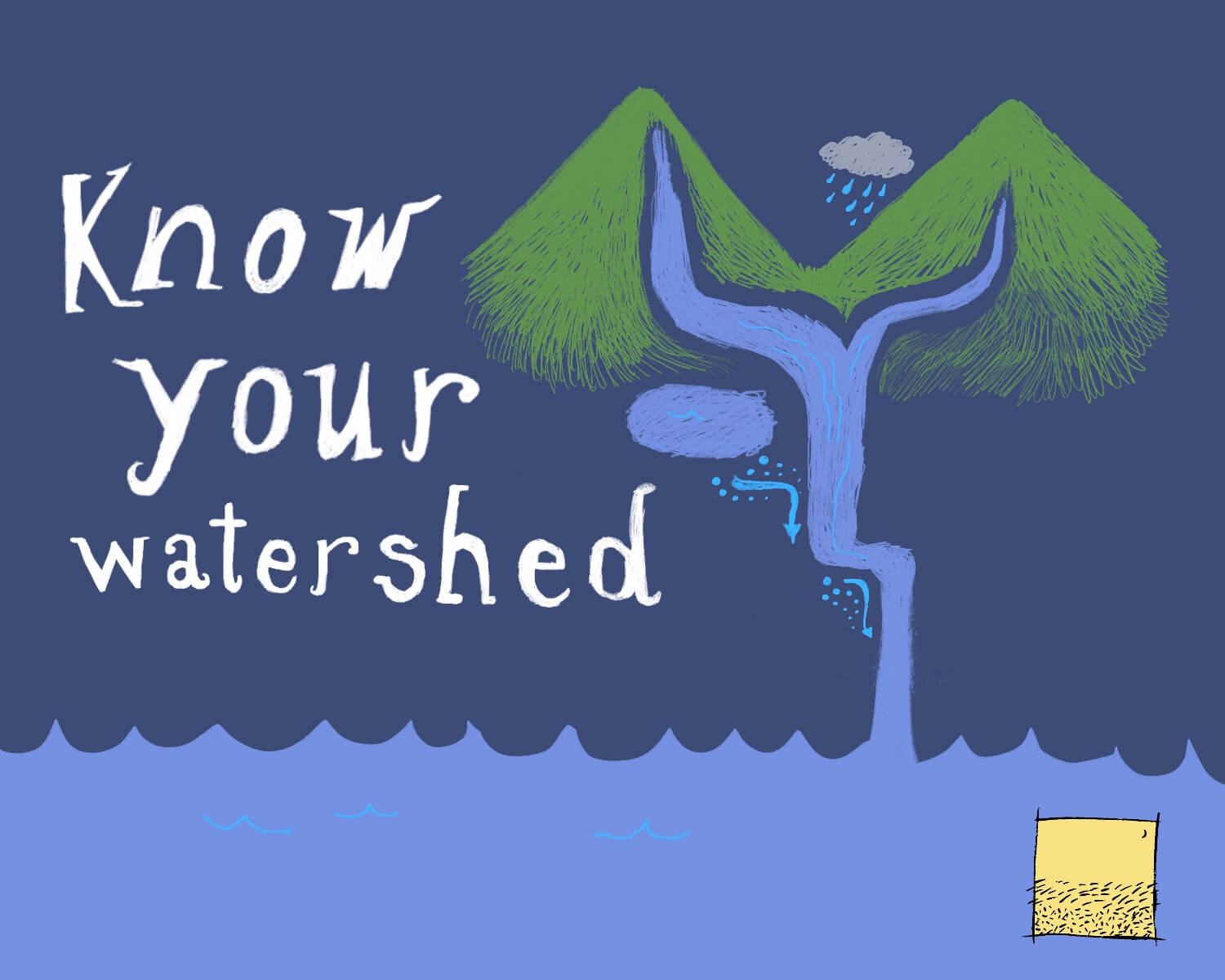
This month, we’re calling your attention to impervious surfaces, areas where human materials block movement through the watershed. Where you see concrete, asphalt and rooftops, these surfaces prevent rain from soaking into the ground, interrupting the natural movement of water through a watershed. As we learned in January, a watershed is the area of land where all rain and snowmelt drain to a stream, creek or river like the Sawkill. In April, we learned how wetlands help filter water as it moves through soil.
Under natural conditions precipitation slowly filters through soil and rock to become underground water — also known as groundwater, which supplies wells, feeds streams during dry periods and supports plants and wildlife. However, when land is covered with pavement, water cannot soak in. Instead, it becomes stormwater runoff, flowing quickly over hard surfaces and carrying pollutants such as oil, fertilizers, road salt and sediment into nearby waterways.
Pavement increases the chances of flash flooding by sending large volumes of water into streams all at once, which can erode stream banks and overwhelm culverts. This rapid runoff has direct impacts on our local watershed health, both in terms of habitat protection and drinking water quality. As stormwater moves across roads and parking lots, it picks up contaminants that degrade water quality and harm aquatic life. Over time, these effects add up, putting stress on the entire watershed. Rushing waters also limit groundwater recharge, reducing the underground water that helps sustain wells and keep streams flowing during dry weather.
One practical step residents can take is to plant a rain garden, a shallow, planted area designed to catch and absorb stormwater before it rushes into streams.